
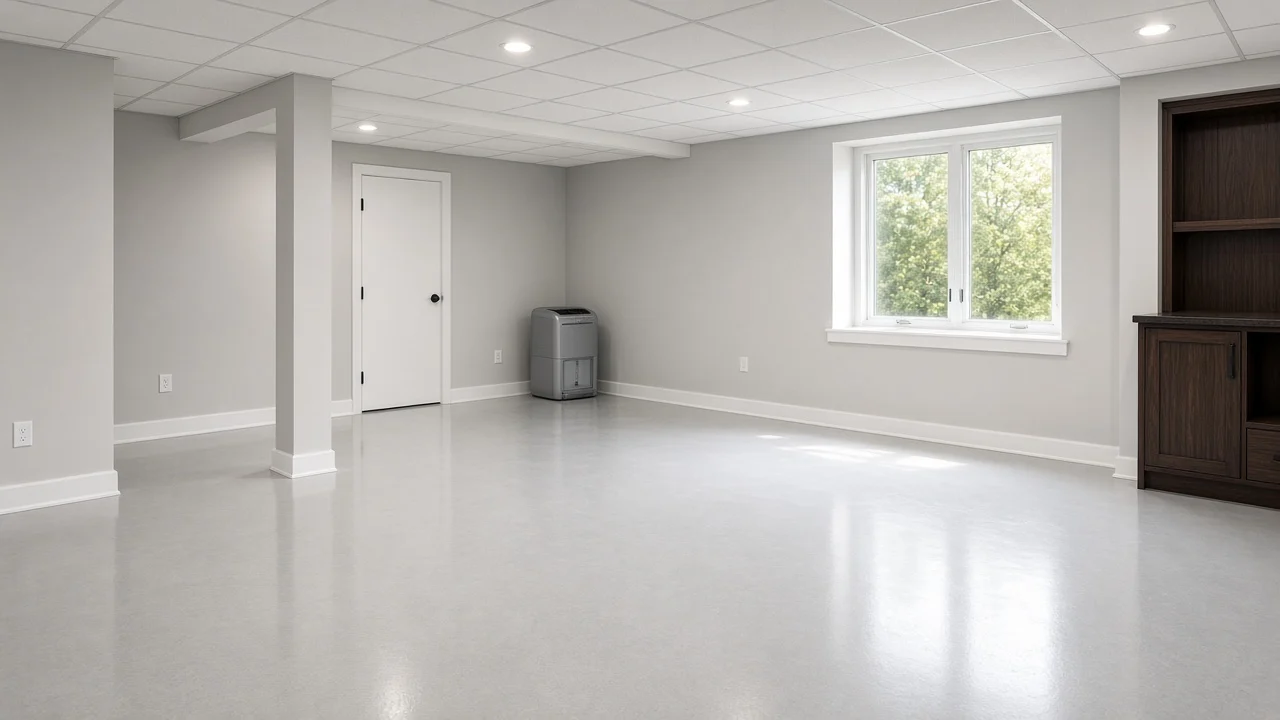
July in Massachusetts brings long days, afternoon thunderstorms and that heavy, sticky air everyone on the North Shore knows well. It is also one of the busiest times of year for garage and basement floor coatings. A lot of homeowners ask us the same question: can you really install an epoxy floor when it is this humid outside?
The short answer is yes, when it is done correctly. The longer answer is that humidity is one of the biggest reasons DIY and low-bid coatings fail, and understanding why will help you make a smarter decision about your floor.
Why Humidity Matters for Epoxy Floors
Epoxy and polyaspartic coatings are chemical systems. They cure through a reaction between resin and hardener, and that reaction is sensitive to temperature, moisture in the air and moisture in the concrete itself. Summer creates challenges on all three fronts.
1. Moisture in the Air
When the air is heavy with water, a cool concrete slab can actually collect condensation on its surface, much like a cold glass of iced tea on the porch. If a coating goes down over a surface that is even slightly damp, it can lead to cloudiness, poor adhesion, bubbling or a soft, tacky finish. Professional installers track the dew point and the slab temperature and only coat when the surface is safely above the point where condensation forms.
2. Moisture in the Slab
Most Massachusetts garages and basements are built on slabs with no vapor barrier underneath, or one that failed long ago. In summer, groundwater and humidity push moisture up through the concrete. That moisture vapor pressure is what causes cheap coatings to blister and peel months after they go down. This is exactly why we test the slab and use a moisture vapor barrier primer where it is needed, rather than just rolling on a coating and hoping for the best.
3. Heat and Working Time
Hot garages shorten the working time of many coatings. Material can begin to set up in the bucket or on the floor before it has properly wetted out and bonded to the concrete. Experienced crews adjust batch sizes, timing and product selection so the coating goes down smoothly and evenly, even on a 90-degree afternoon.
How We Handle Summer Installs
At Dandy Co. Floor Sealing, summer jobs follow the same disciplined process we use all year, with a few extra checks:
- Moisture testing first. We look at the slab before anything else, because no coating can overcome a moisture problem it was never designed for.
- Mechanical surface prep. Diamond grinding opens the pores of the concrete and removes weak surface material, giving the coating a clean, profiled surface to grab onto. You can read more about why this step matters in our post on why concrete prep matters for epoxy floors.
- Monitoring conditions. Air temperature, slab temperature, humidity and dew point are checked throughout the day, not just in the morning.
- Managing airflow. Keeping the garage door partially closed, running dehumidifiers when appropriate and avoiding direct afternoon sun on the slab all help keep conditions stable.
- The right products. Fast-cure polyaspartic topcoats and moisture-tolerant primers give us flexibility when the weather is not cooperating.
What You Can Do Before Install Day
Homeowners can help set the stage for a great result. Clear out the garage completely the day before, let us know if you have ever seen water seeping in along the walls or slab, and keep the door closed the night before if a storm is expected. If you have a basement job, running a dehumidifier for several days ahead of time can make a real difference.
The Bottom Line
Summer is a great time to get your floor done. Your garage gets a long stretch of warm weather to fully cure, and you head into fall and winter with a sealed, protected slab that is ready for road salt and slush. The key is choosing an installer who respects moisture instead of ignoring it.
Ready to get your garage or basement floor done this summer? Call Dandy Co. Floor Sealing today at 617-855-8499 or request your free estimate. We serve Wakefield and communities throughout Massachusetts.