
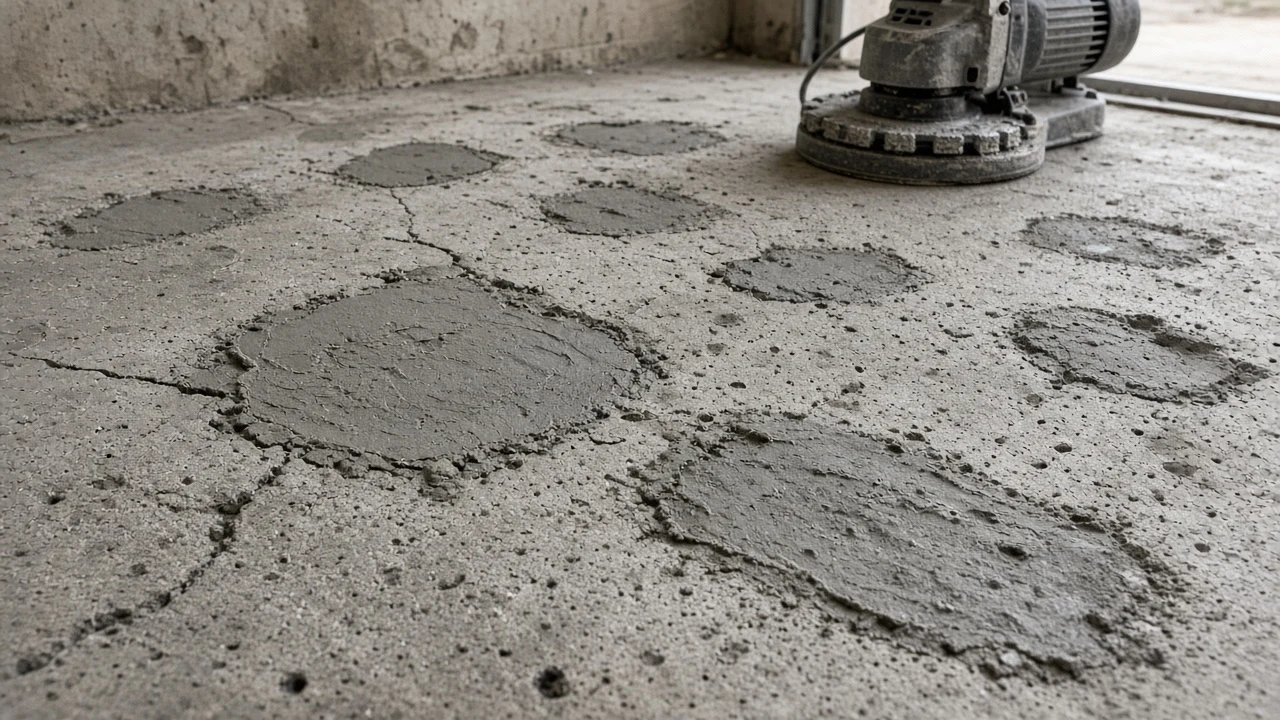
Walk into almost any garage in Massachusetts and look down. Chances are you will see cracks running across the slab, small pits near the door, or rough, flaking patches where the surface has broken away. Decades of freeze-thaw cycles, road salt and heavy vehicles take a toll on concrete.
A common question we get is, “Can you still put epoxy over that?” In most cases, yes. But the repair work that happens before the coating is just as important as the coating itself.
Common Types of Concrete Damage
Hairline and Shrinkage Cracks
Thin cracks are normal in concrete. They form as the slab cures and shrinks, and they are usually more cosmetic than structural. Left unfilled, they will telegraph right through a coating and can let moisture creep in underneath.
Settlement and Structural Cracks
Wider cracks, especially where one side sits higher than the other, can point to settling soil or movement. These need closer evaluation. Some can be repaired and coated; others may need structural attention first. An honest installer will tell you which is which.
Pitting and Spalling
Spalling is when the top layer of concrete flakes, chips or pops off. In New England garages, it is very often caused by road salt and meltwater dripping off cars and soaking into the slab, then freezing and expanding. Pitting is a smaller version of the same problem. Both leave the surface rough and weak.
Control Joints
Those straight saw cuts in your slab are control joints, designed to give the concrete a place to crack neatly. They can be filled for a seamless look or left open and honored, depending on the slab and the system being installed.
How Professional Repair Works
At Dandy Co. Floor Sealing, repairs are built into our prep process, not treated as an afterthought:
- Diamond grinding. We grind the entire floor to remove sealers, contaminants and weak surface paste. This exposes cracks and damage that are often hidden under dirt or old coatings.
- Opening the cracks. Cracks are chased or routed out so the repair material can penetrate deeply rather than just bridging the surface.
- Cleaning and vacuuming. Dust in a crack prevents a good bond, so everything is thoroughly vacuumed.
- Filling with repair materials. We use fast-setting crack fillers and patching compounds designed to bond with concrete and accept a coating on top.
- Grinding flush. Repairs are ground smooth and level with the surrounding slab, so the finished floor looks and feels seamless.
Why Skipping Repairs Is a Mistake
Many DIY kits and low-cost installers simply roll coating right over damaged concrete. The result is a floor that shows every crack and divot, and worse, a coating that has nothing solid to grab onto in the damaged areas. Spalled concrete is weak concrete, and a coating is only as strong as the surface beneath it. We cover this in more detail in our article on rethinking DIY floor kits.
Will the Cracks Come Back?
Concrete is a living material that moves with temperature and moisture. Properly filled cracks and a quality flexible coating system will hide and protect most cracks for many years. If a slab is actively moving, a crack may eventually reappear, which is why we evaluate the floor carefully and set honest expectations before we start.
Summer Is the Right Time
Midsummer is an ideal time to address damage. Repairs and coatings cure well in warm temperatures, and the floor will be fully sealed before the first salt truck rolls through your neighborhood. Waiting another winter almost always means more spalling and a bigger repair.
Got a cracked or pitted garage floor? Call Dandy Co. Floor Sealing today at 617-855-8499 or schedule your free estimate. We will assess the damage and give you a clear plan to restore and protect your concrete.