
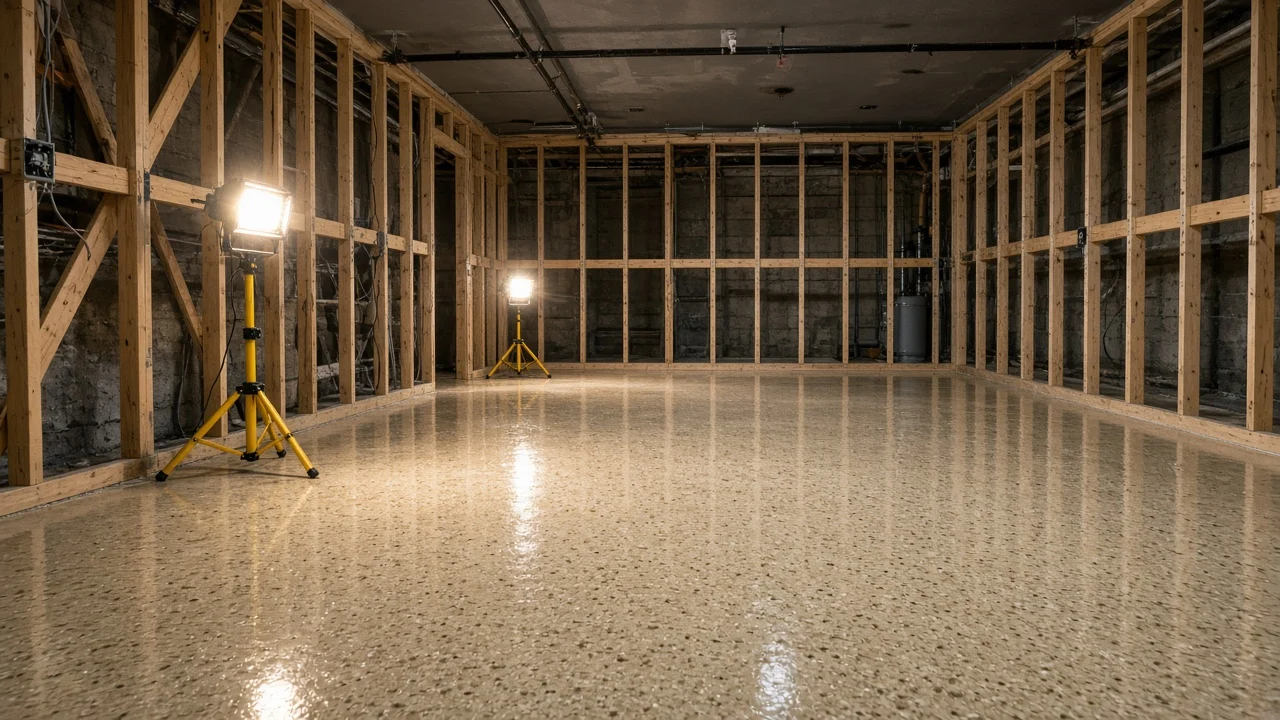
Late summer is when a lot of Massachusetts families start planning indoor projects for the colder months. At the top of many lists is finishing the basement: a playroom for the kids, a home theater, a guest space or a hangout for game day.
Most people start by thinking about walls, lighting and furniture. We recommend starting somewhere else entirely: the floor.
Basements Start With Concrete
Nearly every basement in New England sits on a concrete slab, and that slab is in direct contact with the ground. Even a basement that seems dry can push moisture vapor up through the concrete, especially during humid summers and wet springs. That moisture is invisible, but it is the reason carpet gets musty, laminate swells and vinyl plank flooring develops mold underneath.
Sealing and coating the slab before the rest of the finishing work happens addresses that problem at the source.
Why Doing the Floor First Makes Sense
1. Full Access to the Slab
Once walls are framed, the edges of the slab are buried behind bottom plates and drywall. Coating first lets us prep and seal the entire floor, wall to wall, including the perimeter where moisture problems usually start.
2. Moisture Control Under Everything
A moisture vapor barrier primer and coating system creates a protective layer between the concrete and your new living space. Whether you leave the epoxy exposed as your finished floor or put area rugs and furniture on top, the space underneath stays drier and healthier.
3. Less Dust and Disruption Later
Diamond grinding concrete is a dusty, noisy job. Doing it before new drywall, paint and trim are installed means none of that work gets disturbed. It also keeps fine concrete dust out of new HVAC returns and finishes.
4. A Floor That Can Handle Real Life
Basements flood. Water heaters leak. Kids spill juice. A seamless coated floor can be mopped dry and cleaned without worry, where carpet or wood products might need to be torn out and replaced.
Do You Want Epoxy as the Final Floor?
Many homeowners are surprised by how good an epoxy floor looks in a finished basement. Modern flake blends in grays and whites, or high-end metallic finishes, look intentional and polished, not industrial. Add a few area rugs, and the space feels warm and finished while still being practically waterproof.
If you prefer a different final finish, a sealed slab still gives you a better foundation for whatever goes on top.
Other Basement Benefits
- Reduced concrete dust. Bare concrete constantly sheds fine dust. Sealing it keeps the air and your belongings cleaner.
- Better indoor air quality. Sealing the slab can help limit what comes up through the concrete. Learn more in our post on concrete off-gassing.
- Brighter space. A light, glossy floor reflects light and helps a basement feel less like a cellar.
Already Dealing With Water?
If your basement already takes on water, an epoxy coating is not a substitute for proper drainage, grading or waterproofing. It is an important layer of protection, but active leaks should be addressed first. We are always honest about what a coating can and cannot do. Our article on epoxy for wet Massachusetts basements goes into more detail.
Planning Your Timeline
If you are finishing your basement this fall or winter, schedule the floor first. A coating can typically be completed in a few days, and your contractor can begin framing once it has cured. Talk to us early so we can fit your floor into your overall project schedule.
Planning a basement project? Call Dandy Co. Floor Sealing today at 617-855-8499 to book a free consultation, and let’s build your new space on the right foundation.