
One of the most common concerns we hear from homeowners and business owners alike is simple: “Won’t a shiny epoxy floor be slippery?” It is a fair question, especially in Massachusetts, where floors get wet from summer storms, pool days, snowmelt and everything in between.
The good news is that a professionally installed floor can be both beautiful and safe. It all comes down to texture.
Why Smooth Floors Get Slippery
Any smooth, non-porous surface can become slick when water, oil or soap sits on top of it. Polished tile, sealed stone and smooth coatings all share that trait. A plain clear coat with no texture can feel slippery under wet shoes or bare feet. That is why slip resistance should be part of the design conversation from the start, not an afterthought.
How Anti-Slip Epoxy Works
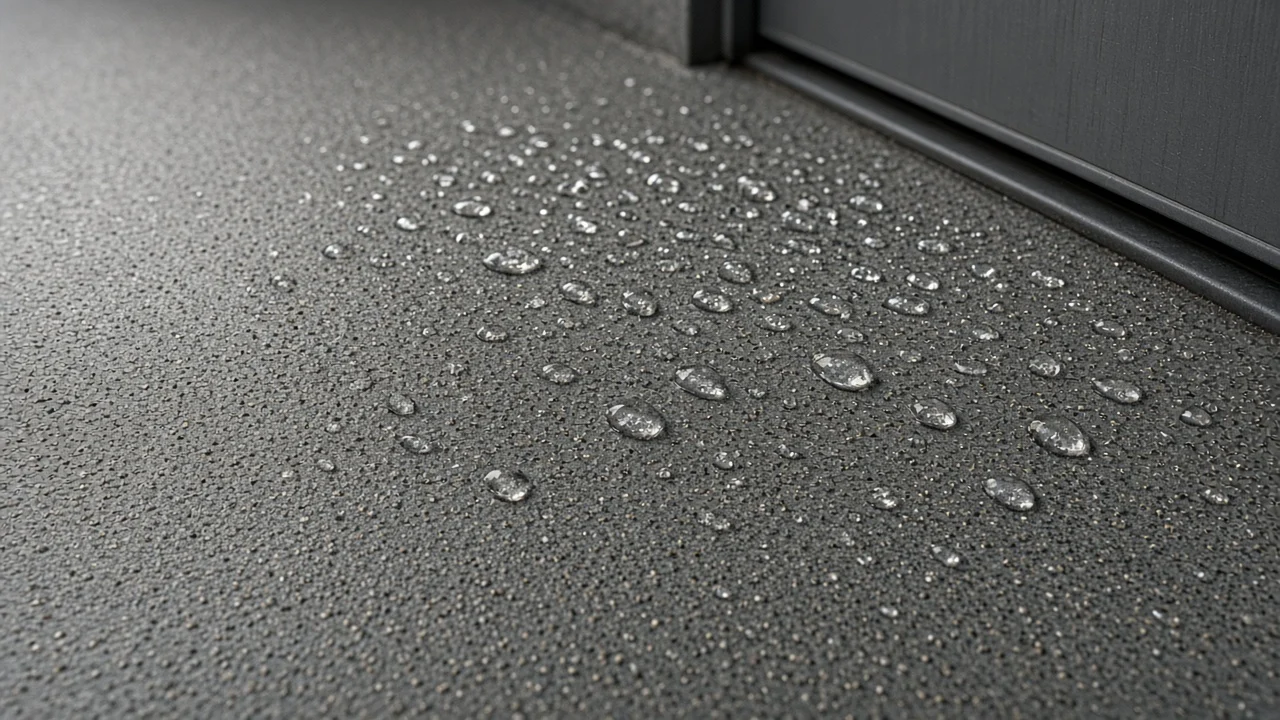
An anti-slip floor uses fine aggregate mixed into or broadcast onto the topcoat. As the coating cures, those particles lock into the surface and create microscopic grip. Common options include:
- Polymer grit additives mixed into the topcoat for a subtle, fine texture that is still easy to clean.
- Aluminum oxide for a more aggressive, highly durable texture in commercial and industrial areas.
- Quartz broadcast systems that build texture throughout the coating for very demanding environments.
- Flake systems, which naturally have more texture than a smooth color coat, especially with the right topcoat.
The amount of texture can be dialed in. A residential garage might use a light texture that is barely noticeable underfoot. A commercial kitchen or ramp might need much more.
Where Slip Resistance Matters Most
At Home
- Garages where snow and slush melt off cars all winter
- Mudrooms, laundry rooms and entryways, which we covered in our post on epoxy solutions for high-traffic entryways
- Basement walkouts near pool and patio doors
- Homes with children, older adults or pets
At Work
- Restaurant kitchens and food prep areas
- Warehouses with loading dock doors
- Auto shops where oil and fluids hit the floor
- Medical offices, gyms and locker rooms
- Retail entrances during the winter months
Balancing Grip and Cleanability
More texture means more traction, but it also means a little more effort to clean. The goal is finding the right balance for each space. A home garage usually does not need the same texture as a commercial kitchen floor, and over-texturing can trap dirt. We help you choose a level that keeps people safe without turning cleanup into a chore.
Testing and Documentation
For businesses, slip resistance is not just about comfort, it can be about liability. Dandy Co. Floor Sealing offers slip testing and certification using dynamic coefficient of friction (DCOF) measurements, with before-and-after reports. That documentation can be valuable for property managers, insurance conversations and peace of mind.
Maintenance Tips
- Clean regularly with a pH-neutral cleaner so residue does not build up and reduce traction.
- Avoid soap-heavy cleaners that leave a film.
- Use entry mats in winter to catch excess water and sand before it spreads.
- Wipe up oil and grease spills promptly in shops and garages.
Want a floor that looks great and keeps everyone on their feet? Call Dandy Co. Floor Sealing today at 617-855-8499 to discuss anti-slip options for your home or business.