
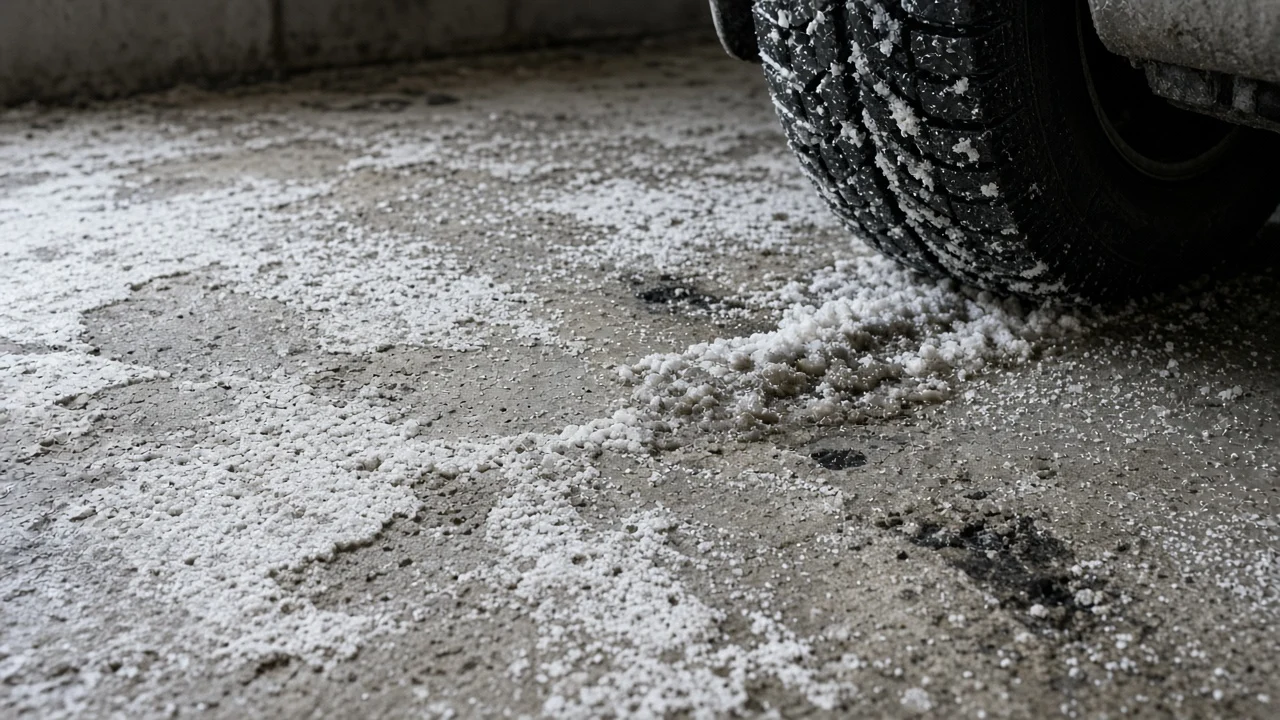
With fall officially here, it will not be long before the plows and salt trucks are back on the roads. Road salt keeps us safe on icy highways, but it is one of the worst things that can happen to a concrete garage floor. If you have ever noticed white crusty stains, rough patches or chunks of concrete flaking off near your garage door, you have already seen it at work.
How Salt Gets Into Your Garage
Every time you drive on treated roads, your tires and wheel wells pick up salty slush. Park in the garage, and that slush melts and drips onto the floor. Over a single winter, a car can carry in a surprising amount of salt, and it all ends up in the same spot: right under your vehicle.
How Salt Damages Concrete
1. Brine Soaks Into the Pores
Concrete is porous, almost like a hard sponge. Salty water soaks deep into those pores instead of sitting on the surface.
2. Freeze-Thaw Cycles
Massachusetts garages, especially detached or unheated ones, swing above and below freezing many times each winter. When water inside the concrete freezes, it expands. That expansion creates tiny fractures. When it thaws, more brine soaks in, and the cycle repeats.
3. Salt Crystals and Pressure
As salty water evaporates, salt crystals form inside the concrete. Those crystals also create pressure that pushes the surface apart from within.
4. Chemical Attack
Some deicers, particularly chloride-based products, can react with the concrete itself and corrode any steel reinforcement in the slab. Over time, this weakens the floor beyond surface damage.
The result is spalling: the top layer of concrete flakes and pops off, leaving a rough, pitted, deteriorating surface that only gets worse every year.
Signs Your Floor Is Already Damaged
- White, chalky residue that keeps coming back
- Rough or pitted areas, especially under where cars park
- Flaking or chipping near the garage door threshold
- Exposed stones or aggregate in the concrete
- Dust that seems to appear no matter how often you sweep
How to Stop Salt Damage
Seal and Coat the Floor
The single most effective way to protect a garage floor is a professionally installed coating. A seamless epoxy or polyaspartic system creates a barrier that keeps salty water on top of the floor, where it can be squeegeed out, instead of letting it soak in. If your floor is already damaged, the spalled areas can be repaired before coating, as we explained in our post on repairing concrete before an epoxy coating.
Remove Slush Regularly
Even with a coated floor, use a floor squeegee to push meltwater out of the garage after storms. It keeps the space cleaner and safer.
Rinse at the End of Winter
A spring wash removes leftover salt residue. On a coated floor, this takes minutes. On bare concrete, it rarely gets everything out of the pores.
Choose Deicers Wisely
Be cautious about what you spread on your driveway and walkways, because it will be tracked inside. Ask your installer what is safe for your specific floor system.
Don’t Let Another Winter Do Damage
Every winter on an unprotected slab means more spalling and more expensive repairs. Coating your floor this fall can stop the damage before it starts, and it is far less costly than replacing concrete down the road. For more on the long-term value, see how long a professional epoxy floor lasts in New England.
Protect your garage before the salt trucks roll. Call Dandy Co. Floor Sealing today at 617-855-8499 or request your free estimate while there is still time this fall.