
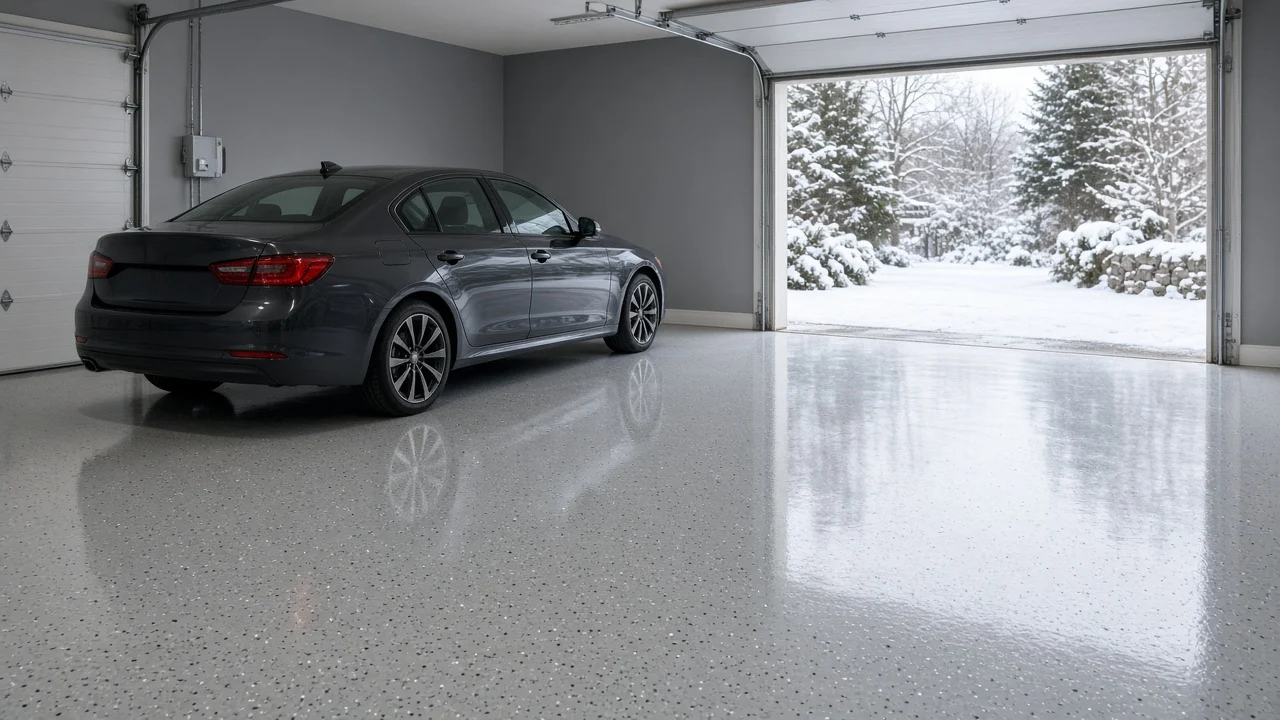
When October arrives, many homeowners start looking for a quick way to protect the garage floor before winter. Home improvement stores are full of options: interlocking plastic tiles, roll-out rubber mats and containment mats designed to catch snowmelt. They seem simple and affordable. But how do they really compare to a professional coating?
Interlocking Garage Floor Tiles
Plastic tiles snap together over the existing concrete and come in many colors and patterns.
The upside: They can be installed without much prep, they hide ugly concrete, and individual tiles can be replaced.
The downside:
- Water gets underneath. Tiles have seams by design. Salty meltwater runs through the gaps and sits on the concrete below, where you cannot see or clean it. That trapped moisture can keep damaging the slab and lead to mildew and odors.
- Dirt collects in the seams and textures. Sand and salt build up in every joint.
- They can shift and lift. Temperature changes and vehicle turning can cause tiles to move or buckle.
- Hot tires and heavy loads can leave marks or deform some tiles over time.
- Cost adds up. Quality tiles for a full two-car garage can approach the price of a professional coating, without protecting the concrete itself.
Rubber and Roll-Out Mats
Rolled vinyl or rubber mats are a step up from bare concrete in appearance, but they face many of the same problems. Water collects underneath, edges curl, and they can trap moisture against the slab all winter long.
Containment Mats
Containment mats have raised edges to hold snowmelt under your car. They do catch water, but the water still needs to go somewhere. You will need to empty or squeegee the mat regularly, and the concrete around the mat remains unprotected. They are a useful accessory, but not a floor solution.
Professional Epoxy and Polyaspartic Coatings
A professionally installed coating bonds directly to properly prepared concrete. It does not sit on top; it becomes part of the floor.
- Seamless and waterproof. There are no gaps for water or salt to slip through. Meltwater stays on top, where it can be squeegeed out the door.
- Protects the concrete itself. The slab underneath is sealed against brine and freeze-thaw damage.
- Easy to clean. Sweep, squeegee and mop. That is it.
- No shifting or curling. Bonded systems stay put.
- Long lifespan. A quality installation lasts for many years in New England conditions.
- Customizable look. Flake, quartz and metallic finishes give you a high-end appearance.
Can You Combine Them?
Yes. Some homeowners add a containment mat on top of a coated floor in a heavy-snow winter to keep the main parking area tidier. That is a great combination: the coating protects the concrete, and the mat just makes cleanup more convenient.
The Bottom Line
Tiles and mats cover up the floor. A coating protects it. If your goal is to stop salt damage, improve appearance and reduce maintenance, a professional coating is the long-term answer. If you are weighing cost, our article on what you should pay for epoxy flooring breaks it down, and our page on DIY epoxy vs. professional installation explains why prep makes all the difference.
Want real protection this winter? Call Dandy Co. Floor Sealing today at 617-855-8499 to see if there is still time to get your floor done before the first storm.