
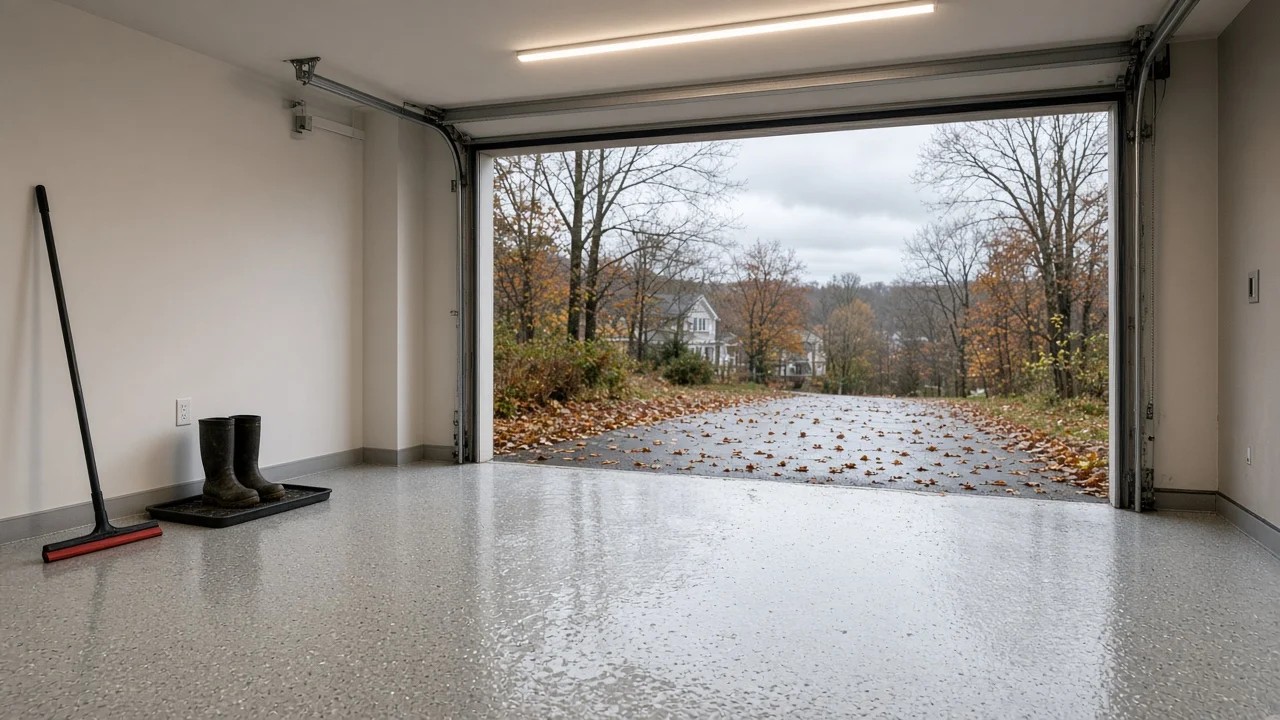
It is one of the most common calls we get this time of year. A homeowner walks into the garage on a mild, rainy morning in late October or November and the whole floor is wet. Nothing leaked, nobody spilled anything and the cars have not even moved. So where did the water come from?
In most cases, the answer is condensation. Your concrete slab is “sweating.” Understanding why it happens will help you deal with it, and it will also help you understand what a coated floor can and cannot do.
What Causes a Sweating Garage Floor?
Concrete is a big, heavy mass that changes temperature slowly. After a string of cold nights, your garage slab stays cold for days. Then a warm, humid front moves through, which happens often in Massachusetts in late fall. The warm, moist air flows into the garage and touches the cold slab. When the surface temperature of the concrete is below the dew point of the air, moisture condenses right onto the floor, just like water forming on a cold can of soda.
The result can be anything from a light sheen to puddles that look like a pipe burst.
Condensation vs. Other Sources of Water
Before you blame the weather, it helps to rule out other causes:
- Meltwater from vehicles. Once the snow starts, slush dripping off tires and wheel wells is the most common source of water on a garage floor.
- Water coming in under the door. A worn or flattened bottom seal lets rain and snow blow in.
- Groundwater. Dampness that shows up in the same spots, especially along cracks or walls, may be moisture coming up through the slab.
- Condensation. If the whole floor is evenly wet on a warm, humid day after cold weather, that is almost always the cause.
Does an Epoxy Floor Cause Condensation?
This is a fair question. On bare concrete, a little condensation soaks into the pores and you may only notice a dark, damp look. On a sealed floor, the water stays on the surface, so it is easier to see. The coating does not create the moisture; it just stops the slab from absorbing it.
That is actually a good thing. When water sits on top of the floor, you can squeegee it out the door. When it soaks into bare concrete, it carries salt and contaminants with it and contributes to the freeze-thaw damage we described in how road salt destroys concrete garage floors.
Keeping a Wet Floor Safe
The biggest concern with any wet floor is slipping. A few steps make a big difference:
- Ask for a textured topcoat. Flake systems and anti-slip additives give the floor grip even when it is damp. Learn more in our post on anti-slip epoxy floors.
- Keep a squeegee by the door. A quick push toward the driveway clears a wet floor in a minute or two.
- Use a boot tray and entry mat at the door into the house.
How to Reduce Condensation
- Keep the door closed on warm, humid days after a cold spell, so moist outside air does not flood in.
- Improve air movement. A fan helps the surface dry faster and reduces how much moisture builds up.
- Run a dehumidifier in an attached or insulated garage during damp stretches.
- Add insulation and weatherstripping. A more stable garage temperature means fewer big swings between the slab and the air.
- Fix the door seal so blowing rain and snow stay outside.
When to Have the Slab Checked
If water keeps appearing in the same spots, or you see white powdery deposits, flaking or bubbles in an old coating, the problem may be moisture coming up from below. That is something to look at before any coating goes down. As we explain in why concrete prep matters for epoxy floors, testing and proper preparation are what keep a coating bonded for the long haul.
Tired of a wet, slippery or stained garage floor? Call Dandy Co. Floor Sealing today at 617-855-8499 or request your free estimate. We serve Wakefield and communities throughout Massachusetts.