
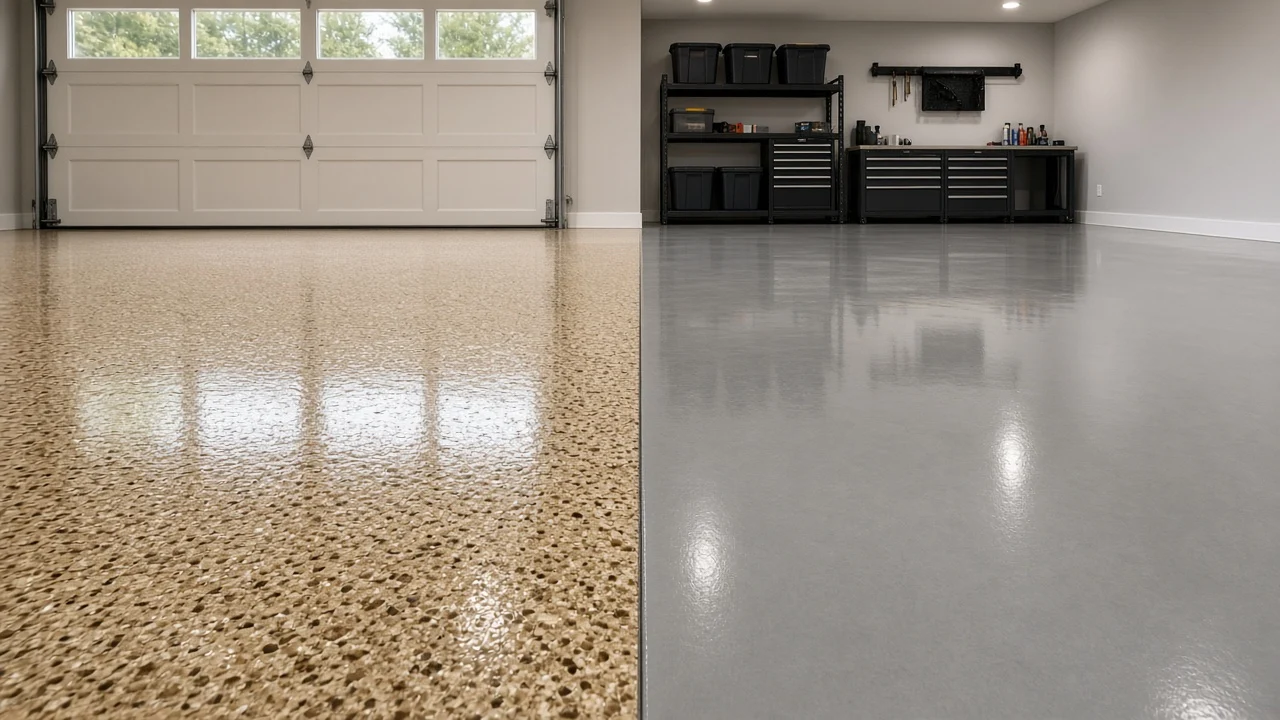
If you have started shopping for a garage floor coating, you have probably heard two words over and over: epoxy and polyaspartic. Some companies push one, some push the other, and plenty of homeowners end up more confused than when they started. Let’s clear it up.
What Is Epoxy?
Epoxy is a two-part resin system that has been used on industrial and commercial floors for decades. It bonds extremely well to properly prepared concrete, builds thickness quickly and is very strong under compression and impact. A high-quality, high-solids epoxy makes an excellent base coat, especially when moisture is a concern and a vapor barrier primer is needed.
Epoxy’s weak spots are well known. Most epoxies are not UV stable, so they can yellow or amber over time when exposed to sunlight through an open garage door. They also take longer to cure, which means more time before you can walk or park on the floor.
What Is Polyaspartic?
Polyaspartic is a newer type of aliphatic polyurea coating. It cures fast, often allowing foot traffic within hours, and it is UV stable, which means it will not yellow in the sun. It is also very abrasion resistant and holds its gloss well, making it a fantastic topcoat for garages that see heavy daily use, hot tires and winter road salt.
The tradeoff is that polyaspartic sets up quickly. It demands experienced installers who know how to mix, spread and back-roll it before it begins to cure. That fast cure is one reason polyaspartic is rarely a good DIY product.
Side by Side
- Bond strength to concrete: Both bond well when the slab is properly ground. Epoxy is often preferred as the primer and base layer.
- UV resistance: Polyaspartic wins. Standard epoxy can yellow in direct sunlight.
- Cure time: Polyaspartic is much faster. Epoxy needs more time before heavy use.
- Abrasion and scratch resistance: Polyaspartic topcoats generally hold up better to scuffing and hot tire pickup.
- Cold weather installs: Polyaspartic can cure at lower temperatures than most epoxies, which is helpful in a New England fall.
- Cost: Polyaspartic material costs more, but labor and downtime can be lower.
Why the Best Floors Use Both
Here is what many homeowners do not realize: it does not have to be one or the other. Some of the most durable garage floors are hybrid systems. A moisture-tolerant epoxy primer and base coat grip the concrete and carry the decorative flake, then a clear polyaspartic topcoat seals everything in with a tough, UV-stable, easy-to-clean finish.
This combination plays to each product’s strengths. You get the deep bond and build of epoxy with the toughness, clarity and fast return to service of polyaspartic. It is also a big reason professional floors resist the problems we described in our article on hot tire pickup and why cheap coatings fail.
Which One Is Right for Your Garage?
The honest answer depends on your slab, your moisture levels, how much sun your garage gets and how you use the space. A garage that faces south with the door open all summer has different needs than a basement storage room. A floor with high moisture readings needs a different primer than a dry slab built last year.
That is why we do not sell one product to everyone. We look at the concrete, ask how you use the space, and recommend a system that will actually last in a Massachusetts climate. If you want to understand what drives the price of each option, our breakdown of epoxy flooring pricing is a good place to start.
Not sure which system fits your garage? Call Dandy Co. Floor Sealing today at 617-855-8499 for a free on-site consultation. We will walk you through your options with no pressure and no confusing sales talk.