
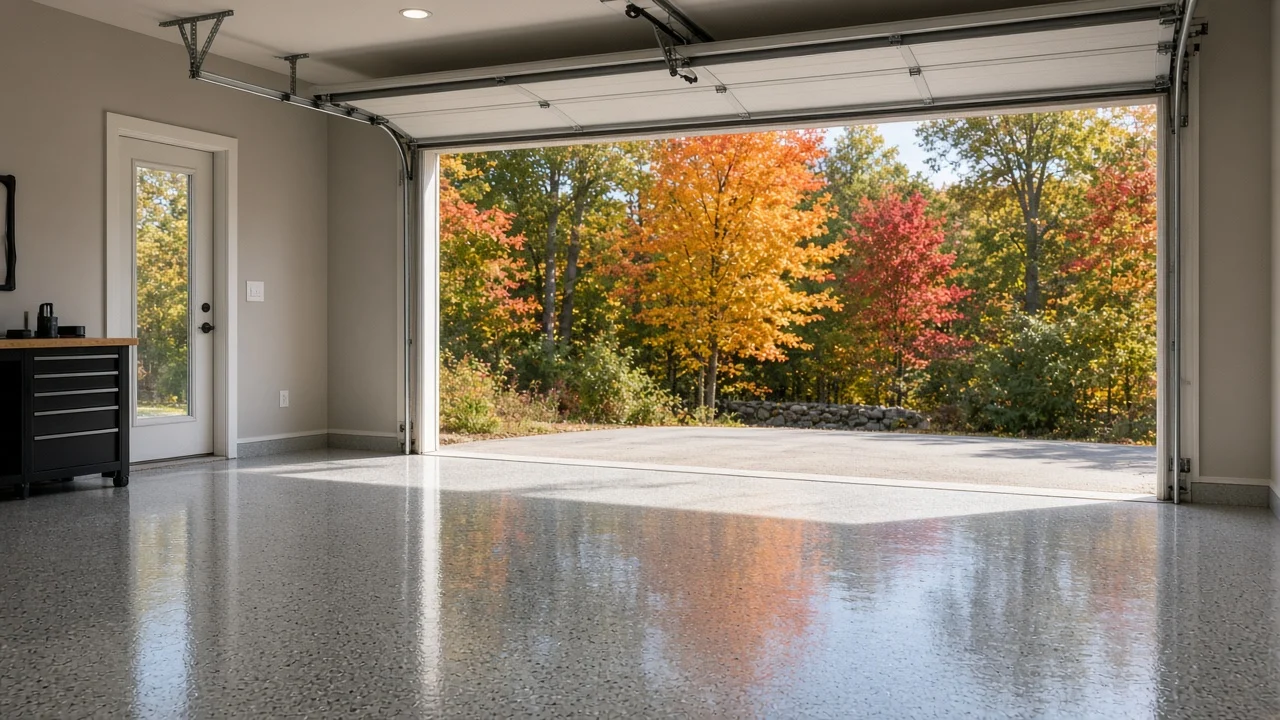
As September rolls on and nights start to cool off, we get a lot of calls from homeowners who assume they have missed their chance. “Is it too late in the year for an epoxy floor?” In most cases, no. Fall installs are very common in Massachusetts. They just require the right products and an installer who pays close attention to temperature.
Why Temperature Matters
Coatings cure through a chemical reaction, and cold slows that reaction down. When temperatures drop too far, several problems can occur:
- The coating takes much longer to cure, or does not fully cure at all.
- Material becomes thick and hard to spread evenly.
- Condensation can form on a cold slab, interfering with adhesion.
- A surface haze or blush can develop with some epoxies.
Most standard epoxies want a minimum slab and air temperature somewhere around the 50s Fahrenheit, though every product is different. Polyaspartic coatings are typically more forgiving and can cure at lower temperatures.
It Is the Slab Temperature That Counts
A sunny 60-degree October afternoon can be misleading. Concrete holds onto cold, and a garage slab may be much cooler than the air, especially in the morning. Professional installers measure the surface temperature directly with an infrared thermometer and compare it to the dew point. The slab needs to be warm enough and safely above the dew point for the coating to bond properly.
How We Make Fall Installs Work
Choosing the Right System
Fast-cure polyaspartic topcoats and cold-tolerant primers expand the installation window well into the fall. They cure quickly, resist yellowing and get you back on your floor fast. We covered the differences in detail in our post on polyaspartic vs. epoxy.
Warming the Space
When needed, we can use heaters to bring the garage up to temperature before and during installation. Keeping the garage door closed during cure helps hold that heat in.
Smart Scheduling
In the fall, we plan the day around the weather. That might mean starting a little later in the morning when the slab has warmed up, or watching the forecast for a dry stretch.
Allowing Proper Cure Time
Cold slows curing, so we may ask you to wait a bit longer before parking. Patience here pays off with a stronger, longer-lasting floor.
What Homeowners Can Do
- Keep the garage door closed in the days leading up to the install to hold in warmth.
- Move vehicles out the night before so the slab is not cooled by melting snow or wet tires.
- Follow the cure guidelines we provide before driving on the floor.
When It Is Too Cold
Once winter fully sets in, there are days when a quality installation simply is not possible without significant heating, especially in detached or uninsulated garages. If that is the case, we will tell you honestly and help you plan for the first good window in spring. We would rather wait than install a floor that is set up to fail.
Don’t Wait Too Long
Every week of fall gets a little cooler. If you want your garage protected before road salt season, the best move is to schedule now while conditions are still favorable.
Still want your floor done before winter? Call Dandy Co. Floor Sealing today at 617-855-8499 to check our fall availability and book your free estimate.